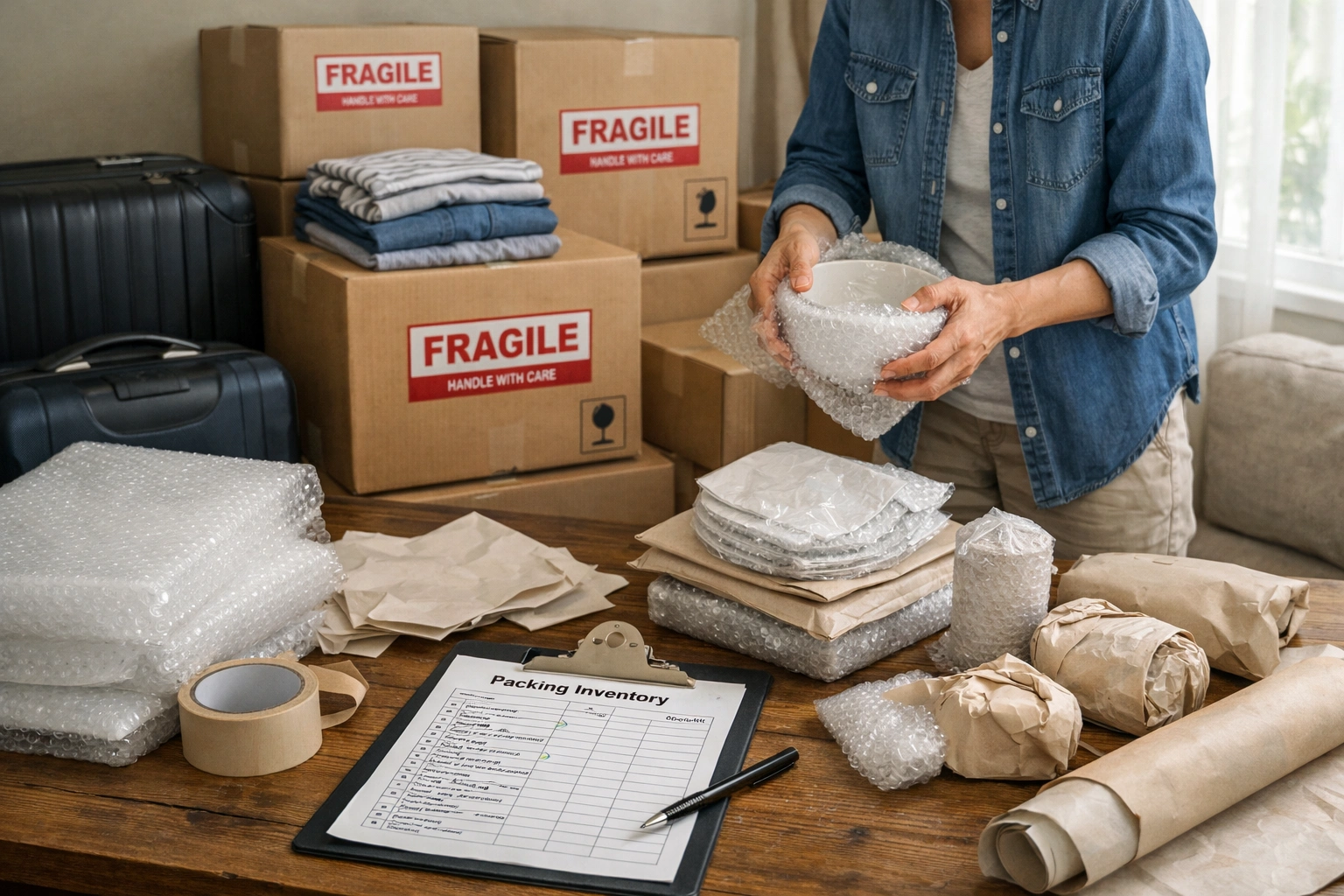
When shipping personal goods overseas, most people underestimate how packing quality, transit conditions, and insurance gaps affect their belongings.
During this hectic time, it’s natural to compare shipping costs and completely forget about the details until they cause problems once you arrive in your destination country.
However, overseas shipping goes beyond loading boxes onto a ship. Your belongings pass through multiple handlers, different climates, and customs inspections. So, you need to be extra careful about everything.
This guide covers what goes wrong during relocations and how to protect yourself. So that you can learn about real costs, proper packing, transit times, customs requirements, and insurance.
Let’s look at what most people miss.
The Real Cost of International Shipping Personal Belongings
Most international shipping companies advertise one price, but the final bill tells a different story since hidden fees arise out of nowhere. Plus, choosing the cheapest way often creates more problems than it solves.
Here’s what truly affects your shipping cost:
Hidden Fees That Catch People Off Guard
Fuel surcharges and currency adjustment fees add 15-25% to your initial quote. These aren’t optional extras either. Every international shipping company charges them, but many don’t mention them until you’re committed.
Next, port handling charges apply at both departure and arrival points, often $200-400 total. These charges cover the cranes, labour, and equipment moving your belongings between the ship and the dock. But nobody explains this when you’re comparing quotes online.
Delivery to residential addresses also costs extra compared to commercial depot collection. It means that if you want your boxes brought to your door instead of picking them up yourself, expect another fee.
Cheapest Way Isn’t Always the Wise Choice
Budget international shipping companies often use slower routes with multiple stops and transfers. That’s why your belongings might visit three countries before reaching the destination.
In this case, lower quotes typically mean basic coverage, leaving your personal belongings vulnerable to damage claims. So when something breaks, you quickly learn that a rock-bottom price rarely includes meaningful protection.
Sometimes, shared container space delays your shipment when other customers aren’t ready to ship (and yes, your stuff really does sit there waiting for someone else’s grandmother’s china to arrive). This freight option saves money initially, but costs you weeks of waiting time.
Packing Materials That Truly Count for Overseas Shipping
Remember, what protects your belongings during a local move won’t survive six weeks at sea. Long transit times expose furniture to vibration, shifting loads, humidity, and temperature changes.
So, using export-grade packing materials reduces the risk of warping, corrosion, and impact damage that often lead to insurance claims.
Let’s have a look at what separates proper packing from expensive mistakes:
Things that Professional International Movers Use
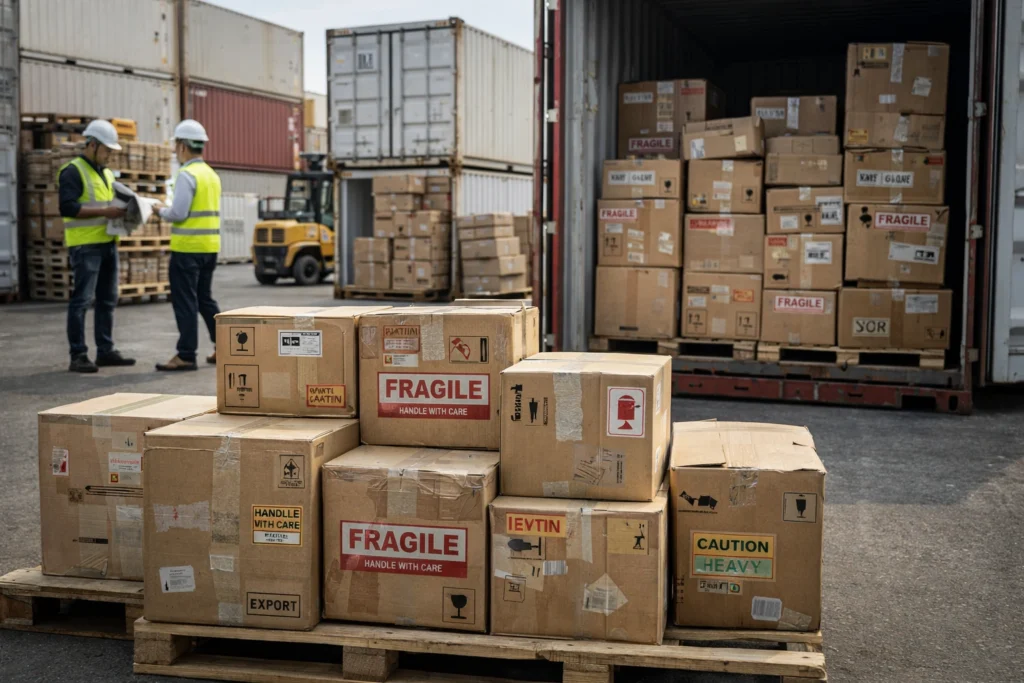
Generally, double-walled export cartons withstand changes in humidity and rough handling during sea freight journeys. By comparison, regular supermarket boxes aren’t built for this. We know these specialist boxes cost more, but they’re engineered for stacking weight and moisture resistance.
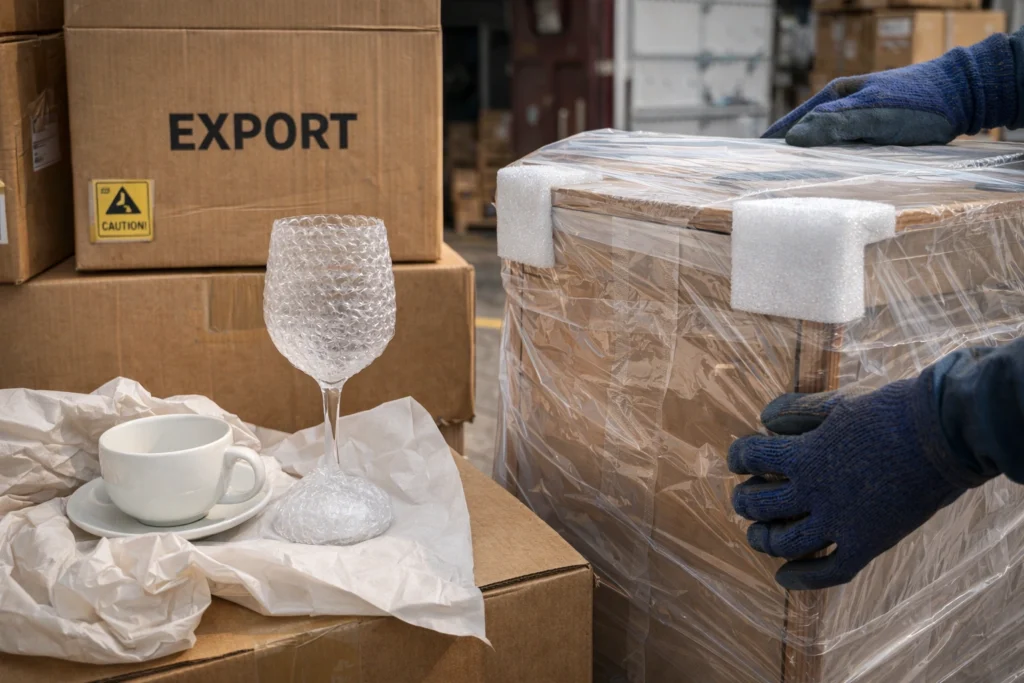
Proper wrapping materials include acid-free tissue, bubble wrap, and foam corner protectors. Each serves a different purpose. For instance, bubble wrap cushions against impact, while foam protectors stop edges and corners from taking damage when boxes shift during the relocation process.
Our experience shows international removals require waterproof wrapping, since ships aren’t climate-controlled like standard moving trucks. So, your household goods experience temperature swings and salt air that ordinary packing can’t handle.
Where Most People Cut Corners (and Regret It)
Sometimes, regular moving boxes collapse under weight during long overseas shipping trips with stacked containers. We’ve seen it happen countless times: what holds up fine for a three-hour drive falls apart after weeks at sea with other cargo stacked on top.
Let’s be honest here. Your newspaper and old clothes wrapper idea retains moisture and creates mould problems in your personal belongings. At the start, it seems like a wise way to save money on packing materials, but you’ll pay for it when you open boxes in your new country and find everything covered in mildew.
On top of that, inadequate padding allows items to shift and break when containers are moved between ships and trucks. This happens because your shipment is loaded and unloaded multiple times during transit. So, without proper cushioning inside each box, items bounce around and damage one another.
Transit Times: What International Removals Really Take
Generally, international removals take 8-11 weeks in total when you include sea freight, customs clearance, and final delivery.
Throughout this time, your personnel items don’t just sit on a ship for a few weeks. They pass through multiple stages, each adding time to your international move.
Have a look at what the detailed and real shipping schedules look like:
Stage | Time Required | What Happens |
Sea freight (Australia to UK) | 6-8 weeks | Your shipment travels across the world with multiple port stops |
Air freight option | 2-3 weeks | Faster delivery, but costs 4-5 times more than sea freight |
Customs clearance | 2-3 weeks | Officials process documentation and may inspect your belongings |
Peak season delays | +2-4 weeks | November-January bookings face container space shortages |
Random customs inspections | +1-3 weeks | Unpredictable holds even with perfect documentation |
Useful Tip: Plan for at least three months from pickup in Australia to delivery at your destination. Besides, temperature and humidity changes during ocean transit can also damage items not properly protected, so factor in time for proper packing too.
Customs Documentation for Personal Effects
Customs regulations vary by country, but the paperwork requirements are always strict. Your international shipping company can help with this, but you’re responsible for providing accurate information.
Here’s what documentation you need sorted before your belongings leave Australia:
Papers Your International Shipping Company Needs
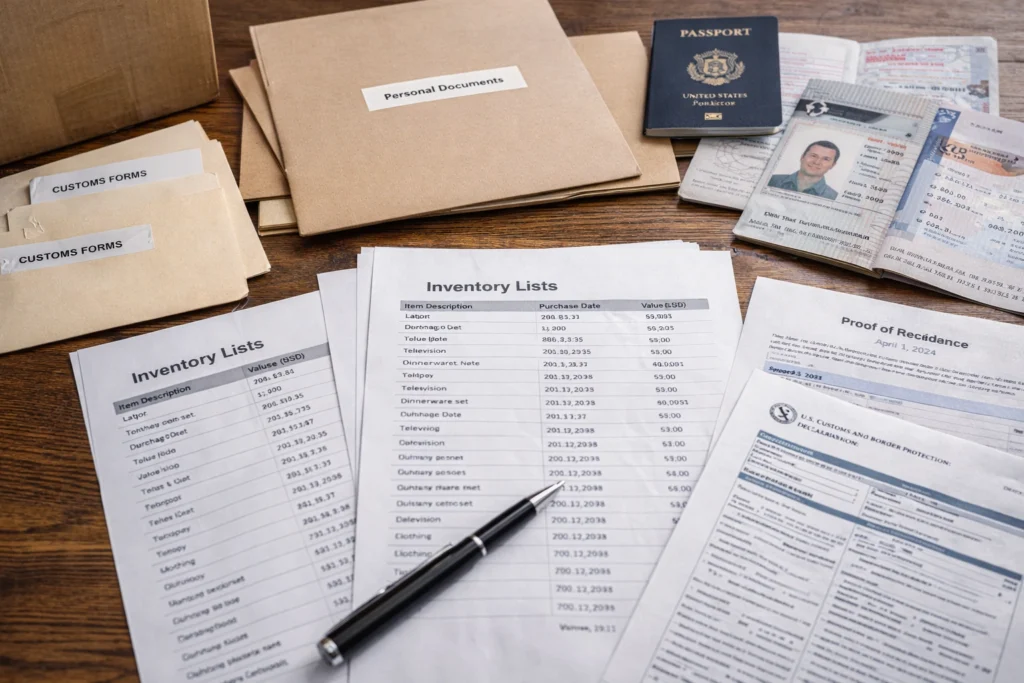
Your detailed inventory lists must include purchase dates and values for every item you’re shipping. And we’re not talking about rough estimates here. Customs wants specific details: “Samsung 55-inch TV purchased in 2022, value $800” rather than just “television.”
Besides, important documents, including passport copies, visa documents, and proof of residence, establish that you’re genuinely relocating internationally. These prove you’re moving your personal effects to start a new life, not importing commercial goods to sell.
Generally, prohibited goods lists vary by country, which requires research before your international move begins. For example, certain items like wooden furniture need fumigation certificates, while restricted items require special permits. What’s legal to ship to one destination might be completely banned in another.
Common Delays When Moving Belongings Overseas
Missing or incomplete paperwork stops your shipment at customs for weeks until corrected. As a result, the process doesn’t just slow down. Everything sits in a warehouse, and storage fees are racking up while you scramble to fix the documentation.
On top of that, undervalued declarations trigger inspections when customs suspects you’re avoiding import duties. They cross-reference your listed values against typical market prices. If something looks off, they’ll open every box to verify.
Insurance Gaps in Your International Move
Basic coverage saves money upfront but costs thousands when something breaks. While most international shipping companies offer standard protection, the fine print reveals serious limitations.
Look at the following elements when insuring your personal belongings for an overseas move:
- Standard Coverage Limitations: International shipping companies only pay $2-3 per kilogram for damaged items. For instance, your $2,000 laptop weighs 2kg, so you’d get $6 if it breaks during the relocation.
- Excluded Items List: Basic policies don’t cover fragile items, electronics, and anything packed by the owner themselves. So pack your own boxes to save on cost, and you’ve voided coverage for everything inside them.
- Full Replacement Value: This insurance costs 3-5% of the declared value but covers actual losses. It’s better topay $150 to properly insure $5,000 worth of household goods instead of risking everything with basic coverage.
- Port-Only Protection: Usually, coverage ends at your destination port unless you specifically pay for door-to-door delivery protection. Plus, damage during the final leg to your new home isn’t included in standard policies.
- Reporting Deadlines: Damage discovered after arrival requires immediate reporting, usually within 7 days. Miss that window, and you’re out of luck, even with proper insurance.
- High-Value Item Caps: Personal effects like jewellery and cash have maximum claim limits regardless of coverage. Which is why anything worth over $1,000 per item typically needs a separate declaration.
Verdict: Budget for proper insurance as part of your total shipping cost. The few hundred dollars extra now beats losing thousands in damaged belongings later.
Ready to Ship Your Personal Goods?
Overseas shipping of personal goods gets easier when you understand real costs, proper packing, transit times, customs regulations, and insurance coverage. Besides, relocating internationally means planning and choosing the right freight option for your personal effects.
Your international move deserves an experienced moving company that handles household goods professionally. So, if you’re shipping by sea freight or air freight, the right shipping service makes a real difference here.
Searching for a smooth sailing service to relocate your goods overseas? Gooferman’s friendly team specialises in international relocations.
Visit us online to get at least three quotes, track your shipment, or contact our team about your new adventure. We’ll help you start your new life with your belongings arriving safely at your new home’s door.