
Moving abroad can take careful planning across a lot of areas, including finances, legal documents, school options, and shipping logistics. Unfortunately, most of these tasks need to happen at the same time, and if one part falls behind, it can easily disrupt the rest of your plans.
That’s why a structured overseas moving checklist keeps each step on track and reduces costly mistakes. It can help you stay organised, reduce mistakes, and keep each step on track.
In this guide, we’ll share how you can plan your international relocation around your schedule, including choosing your destination, preparing documents, and arranging moving essentials.
How to Organise Your Overseas Relocation the Right Way

Good overseas relocation planning comes down to one thing: putting the right tasks in the right order. Below, we’ll show you how you can make a generic checklist into a plan that fits your life.
Why Most Moving Abroad Checklists Fall Short
Most moving abroad checklists fall short simply because they list tasks without much structure. In other words, they tell you what to do, but not when to do it or how each step fits together.
That can become a problem when you’re trying to coordinate across time zones, school terms, and work contracts all at once. Without a clear order, even a small delay, like missing a document deadline or booking flights late, can lead to bigger issues later in the process.
On the other hand, a useful checklist can help you make decisions by showing you what needs attention first. It should specifically match how your daily life runs, especially when you are balancing work, kids, and a major move at the same time.
Start With Your Destination Country and Host Country
Before you start booking flights or signing contracts, take time to properly research your destination country. This will help you understand the key factors that’ll affect your move, including living costs, housing options, healthcare, and education.
For example, the cost of renting a two-bedroom flat in Singapore can be several times more than renting one in Portugal. So if you know what to expect financially, you can set a realistic budget from the start.
Plus, getting familiar with local customs, cultural differences, and everyday expectations will help your whole family adjust more quickly once you land.
Now, if your new country speaks a different local language, we highly recommend learning a few basic phrases early on. Even a handful of everyday phrases can make settling in feel a lot less overwhelming.
Build a Timeline Around Your Life
You should build your timeline around the things you can’t easily change. That means work contracts, notice periods, school terms for family members, and visa approval windows. Then, put all of these dates on a shared calendar so everyone in your household can see what’s coming up.
Without this structure, people often rush major decisions like housing or school enrolment simply because time runs out.
Pro Tip: Start at least three months ahead to give yourself space to handle delays and unexpected changes with less pressure.
Make a Moving Abroad Checklist Into a Plan
As you understand by now, a checklist only works when it has some structure behind it. So instead of one long to-do list, try breaking your tasks into three clear stages:
- Immediate Priorities: Visa applications and passport renewals should be at the top of your list. Since these can take several weeks to months to process, we recommend starting them as early as possible to give yourself breathing room for everything else.
- Mid-Term Actions: Once these major steps are in progress, you’re ready to handle the practical parts of the move. This includes preparing important documents, setting up a bank account, and arranging mail forwarding.
- Final Preparations: In the last few weeks before departure, you should put your attention to packing personal belongings, booking shipping logistics, and locking in travel insurance. Because, by this stage, most of the major planning, approvals, and paperwork should already be complete.
Your main benefit here will come from how you order each step. Once each of your tasks sits in the right place in your timeline, you’ll spend less time second-guessing and more time getting things done.
Overseas Relocation Essentials: Documents, Banking, and Logistics
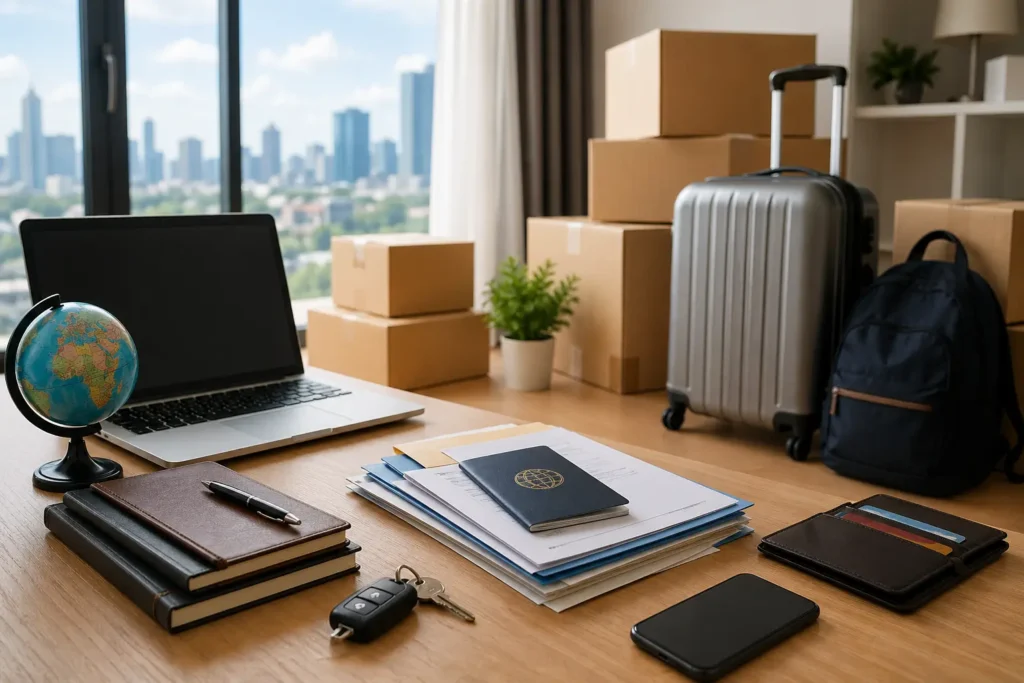
Getting your paperwork, finances, and logistics sorted early on is one of the best things you can do before relocating overseas. Let’s walk through each part so you know exactly what to focus on and when.
Organising Important Documents
Your first step is to gather all the important documents for your move. This includes passports, visas, birth certificates, medical records, health certificates, and any legal papers linked to your identity or residency.
Once you’ve got the documents in one place, you should make digital copies and save them to an encrypted USB.
We also recommend keeping printed copies in a physical folder for situations like airport checks, customs, or embassy visits. It may feel like extra work, but we’ve seen it prevent major delays for families (so trust us on this one).
Setting Up Your Finances Before You Leave
You’ll need your bank account for rental deposits, setting up utilities, and daily spending while international transfers are still processing. That’s why you should open a bank account in your destination country before you arrive to make your first few weeks much easier.
While you’re at it, don’t forget to sort out your financial obligations back home. For example, if you own property in Australia, capital gains tax might apply when you sell. The Australian Taxation Office also expects you to review tax obligations on your worldwide income (even while you’re living overseas).
We recommend speaking with a tax professional to confirm what applies to your situation.
Insurance Coverage That Protects You Properly
Once your finances are in order, the next area to sort out is insurance.
Travel insurance is a good starting point, as it’ll cover your flights and short-term medical expenses during transit. But once you’ve settled into your new country, you’ll need proper health cover on top of that, especially if you’re not eligible for the local public healthcare system.
If you’re also shipping your belongings overseas, it’s worth looking into property and shipment cover as well. You can arrange this through your international movers or a separate insurance provider. Without this protection, you could end up paying out of pocket if something gets damaged or goes missing along the way.
Choosing International Movers and Managing Logistics
Picking the right international moving companies is a big decision, so it’s worth comparing a few options before you commit. In particular, you should focus on these four factors:
- The range of services they offer
- How clear and transparent their pricing is
- Customer reviews and feedback
- How they manage customs requirements in your destination country
After that, you’ll need to choose between air freight and sea freight. Air freight will get your things there faster, but costs more. Sea freight, on the other hand, is better suited for larger shipments and will give you more time to settle in after arrival.
Once that decision is made, you can plan your full moving timeline around it. This means booking your movers early, confirming customs requirements, and aligning packing and pickup dates with your travel schedule.
Settle Into Your New Life in a Foreign Country With Ease

So, how are you feeling about your overseas move now? Hopefully a bit more sorted and a lot less overwhelmed.
Because your experience will actually begin once you step off the plane and start your new life in a foreign country. Yes, those first few days can feel a bit strange, and that’s completely normal. After all, you’ll be adjusting to different routines and picking up on communication styles that might be very different from what you’re used to back home.
However, you can build simple daily routines to make the adjustment easier. This could include school drop-offs, grocery shopping, and weekend plans for your family. Once those routines feel steady, you can focus on connecting with local expat groups or community networks.
And if you need support with the shipping and logistics side of your move, our team at Gooferman is always happy to help make that part easier for you.