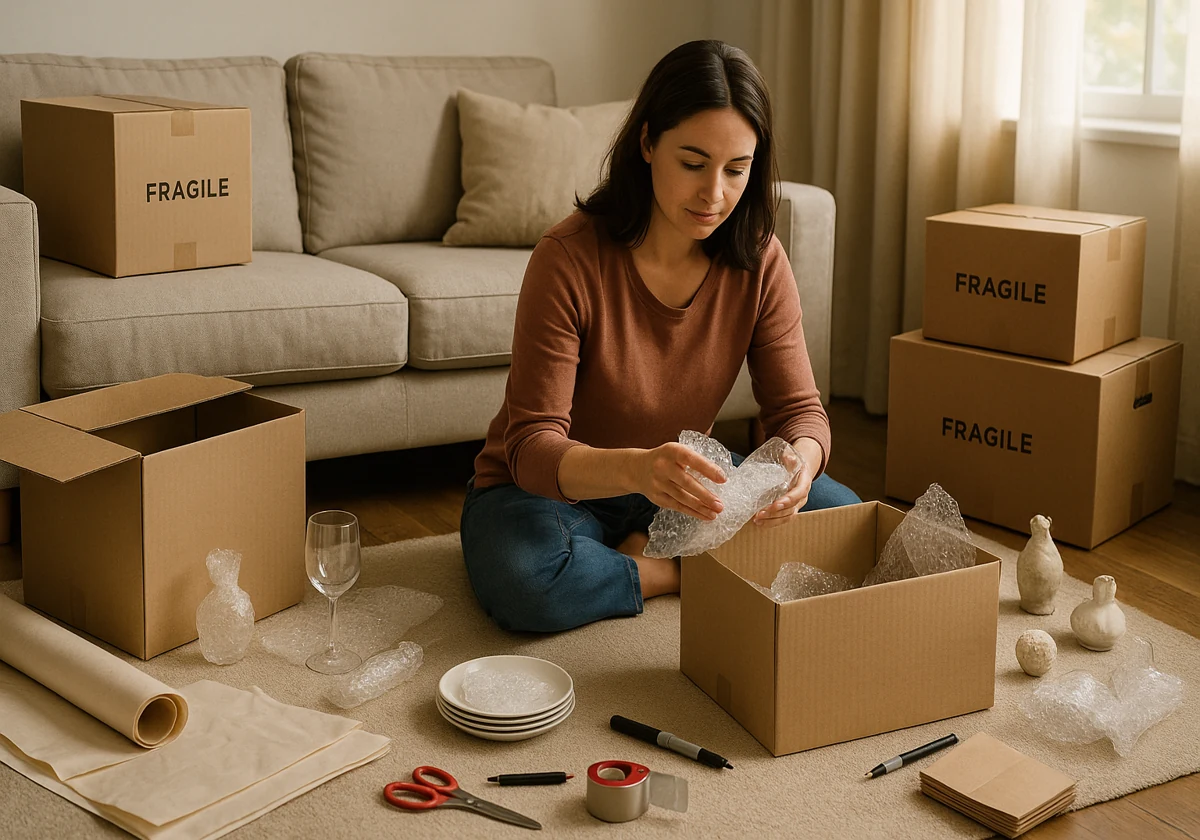
During international moves, your fragile items go through weeks of handling, temperature, and rough transport across multiple countries. That’s why proper packing materials and techniques are essential to protect your valuables.
At Gooferman, we’ve helped hundreds of Australians move fragile items overseas without damage. And in this guide, we’ll share those proven techniques you need to pack fragile items for overseas moves.
Let’s start with the essential packing materials you’ll need before moving day.
What Packing Materials Do You Need for Fragile Items?
You can use bubble wrap, double-walled boxes, packing peanuts, quality packing tape, and cardboard dividers to wrap the fragile items.
But most of the time, people grab whatever boxes they find at the supermarket and wonder why their wine glasses arrived in pieces. In reality, cheap packing materials cost you more in broken items than you save upfront.
While packing fragile goods, bubble wrap is your best friend. Use large bubbles to protect your heavier items like plates and bowls. Whereas, small bubbles work fine for lighter items like tissue paper-wrapped ornaments.
And don’t skip the packing peanuts. They fill all the space in boxes so nothing shifts during transport. Since boxes move around in the shipping container, items bang together and get cracks and chips.
Cardboard dividers separate glassware and stemware. Without them, glasses keep hitting each other during transit. Sometimes, they are even more flexible than bubble wrap in surviving constant vibration.
Pro Tip: Invest in proper packing materials before moving. The cost of replacing broken valuables is always higher than buying quality supplies upfront.
Pack Each Fragile Item Individually
Wrapping each item separately ensures that nothing touches or damages the other. We often consider it the best part about individual packaging.
But to do it the right way, you must wrap every single piece in multiple layers of bubble wrap. Then secure it with packing tape so the wrapping stays tight during the journey.
If you are carrying heavy items, pack them at the bottom of boxes. Make sure the lighter and fragile goods are on top. Because putting a heavy ceramic vase on top of wine glasses is asking for trouble. The tighter you pack boxes (without crushing items), the safer your fragile items stay during transport.
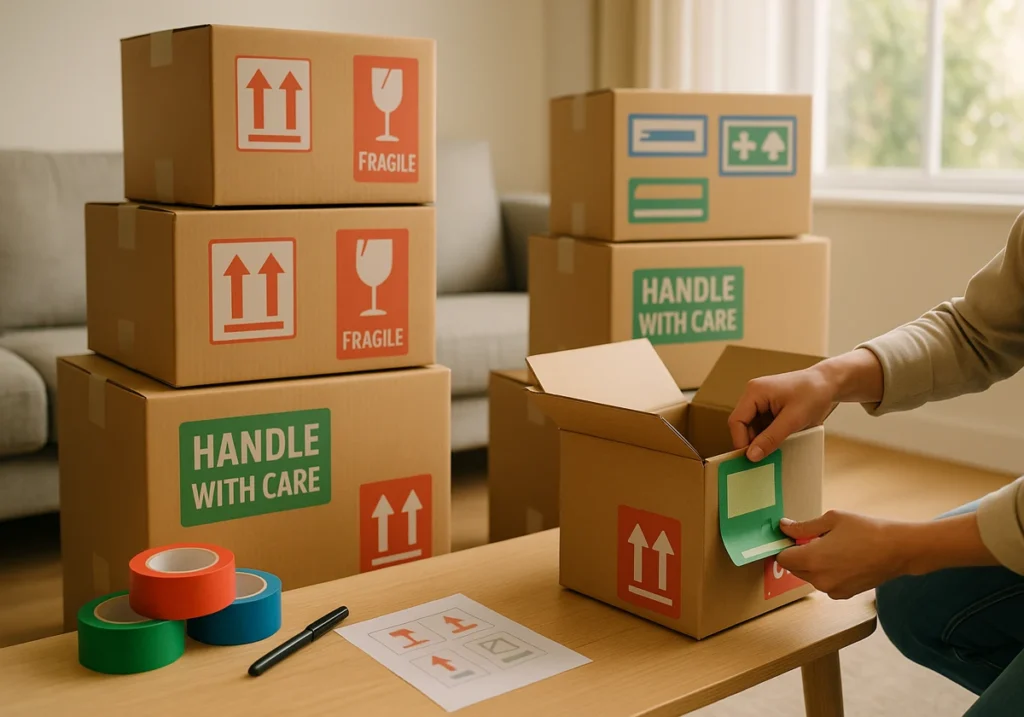
After packing, your boxes need “This Side Up” labels, “Handle With Care” stickers, and bright coloured tape. These markups let your handlers know how to move it correctly.
Now, you need to keep note of these label types, where to place them correctly, and with the corresponding reason.
|
Label Type |
Where to Place |
What It Does |
|
This Side Up |
All four sides of the box |
Prevents boxes from being stored upside down during weeks of sea freight |
|
Handle With Care |
Next to the shipping label |
Bright red/orange stickers catch attention in busy warehouses |
|
Coloured Tape |
All seams and edges |
Red or pink tape signals extra care needed during transport |
Verdict: Proper labelling is the cheapest insurance you can buy. A few dollars in stickers can save thousands in broken valuables.
International Moves Face Unique Challenges

Now that you’ve got your packing materials sorted, let us show you why we suggested those processes instead of your free boxes.
Sea Freight And Sudden Climate Change
Sea freight usually takes 4-8 weeks to reach your destination. During that time, your fragile items sit in shipping containers that swing between extreme temperatures.
For example, a container on deck in tropical heat hits 60°C inside. Then it arrives at a freezing port where temperatures drop below zero. This constant temperature shift causes condensation inside boxes, which weakens cardboard and damages your valuables.
Especially, temperature-sensitive goods like electronics and wooden items are most at risk.
Multiple Handlers At Customs And Ports
In the port, your boxes are handled by dozens of dock workers, customs officers, and warehouse staff. Each of them handles your shipment differently.
For instance, customs clearance officers handle the boxes by opening them to inspect the contents. Naturally, they don’t always repack items with the same care you used. So, the longer your transit time, the more handling your fragile goods face.
Example: One family watched customs officers stack their fragile boxes under heavy cargo. The top box collapsed.
Should You Get Insurance for High-Value Shipments?
Did you know that around 11% of goods arrive at distribution centres already damaged during transit? That’s more than one in three boxes.
Which is why you’ll need proper insurance. Full-value protection insurance covers the repair of damage. Let’s take a look at how this works.
Imagine standard shipping liability only covers around $100 per box. If your grandmother’s antique china set is worth $5,000, then it’s a massive gap. Here, full value insurance protects your high-value goods and provides actual replacement cost.
Most international movers offer insurance options when you book. And the cost is usually 1-3% of your total shipment value (Worth it for peace of mind.)
However, insurance claims need proof, so create detailed inventory lists of your contents. Then, take photos of each fragile item before packing and note if there are any existing scratches or chips.
Remember to save all receipts for high-value items since insurance companies want proof of purchase value.
Special Packing for Glassware and Electronics
Glassware and electronics are different from other fragile items. Here, they need extra layers of protection with the cardboard dividers. It helps prevent wine glasses and plates from colliding.
You can buy special dish pack boxes that come with dividers already installed. Or make your own dividers from spare cardboard. Either way, the goal is to create separate compartments for each glass or plate.
Double-boxing also adds a protection layer for electronics during international shipping. Place your wrapped item in a smaller box, then put that box inside a larger one with packing peanuts filling the space between.
In this way, the outer box absorbs shocks and impacts during transit. So the inner box keeps your electronics or sensitive equipment secure and protected from temperature variation
Common Packing Mistakes That Damage Fragile Items
Why do so many people lose their valuables during international moves? Because they make the same packing mistakes that cost them hundreds, sometimes even thousands of dollars.
Now, let’s see a few common mistakes that you should always avoid.
Using Old Or Damaged Boxes
Old boxes collapse under weight, causing your fragile goods to break. Instead, get double corrugated boxes that are designed for shipping and can handle the weight and stacking pressure of international transport.
This is why we recommend investing in new boxes rather than those used supermarket boxes. They cost more upfront but prevent breakage during transit.
Overpacking Boxes With Fragile Goods
Never overpack your boxes since they can get too heavy for handlers to carry safely.
Remember, the boxes under 20kg are manageable. When this limit is exceeded, handlers may drop it. So, pack the heavier items in smaller boxes and lighter items in larger ones so that your boxes easily bypass rough handling.
Not Using Enough Packing Materials
Not using enough packing materials lets items shift and crack easily. Every centimetre of empty space in your box is a risk. That’s why you should use packing peanuts, bubble wrap, or crumpled packing paper to fill these gaps.
Quick Tip: When you pack fragile items, the goal is to eliminate all movement inside the box. Shake the box gently before sealing to check whether items are moving.

Professional Packers vs DIY Packing
After learning these techniques, you might wonder if DIY packing is worth your time. Well, he answer depends on what you’re moving and how much risk you’re willing to take with your valuables.
Professional packers have experience protecting high-value goods during international moves. They know exactly how to wrap fragile items, which boxes to use, and how to pack them for weeks of transit.
The service costs more, but it safeguards your belongings and the peace of mind. They also offer full liability coverage when their team does the packing. So, if something breaks, they’re fully responsible.
Beyond these, packing services also save you weeks before moving day arrives. What takes you three weekends to pack, professionals finish in one day.
So, you can focus on other aspects of your international move like sorting documents for customs clearance, arranging storage at your destination, or saying goodbye to friends.
Verdict: For high-value shipments or if you have a short time, professional packing makes sense. On the other hand, for everyday items and clothing, DIY packing works fine.
Ready to Move Your Fragile Items Overseas?
Packing fragile items for international moves takes time, the right materials, and careful planning. But you don’t have to do it alone.
Gooferman specialises in international shipping and relocations from Australia. Our expert team handles everything from professional packing services to customs clearance, so your fragile goods arrive at their destination safely.
Get a free quote today and take the stress out of your international move.