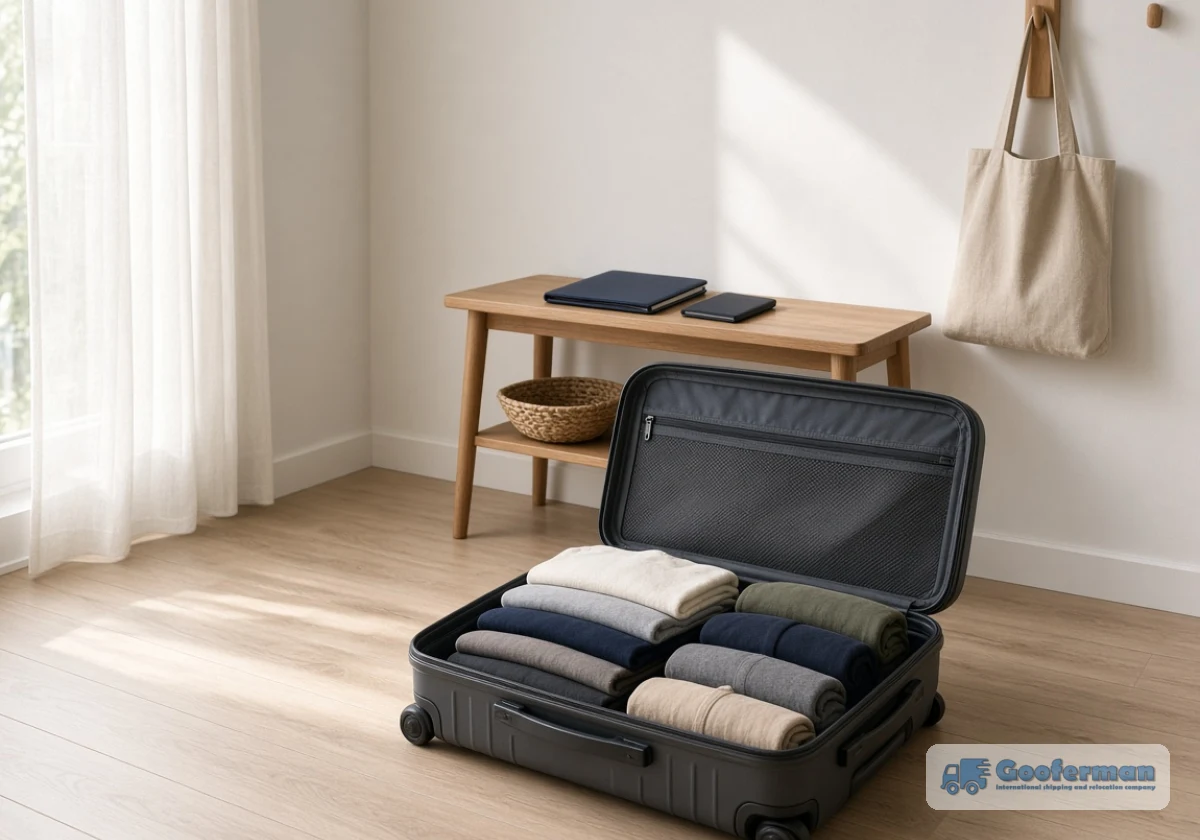
Moving overseas essentials are the things you carry on the plane, because your shipped belongings often arrive well after you do. Your first month abroad runs on what fits in your luggage, so that luggage deserves a plan of its own.
That gap catches plenty of people out. They pack the house into a container, land in a new country and realise their kettle, winter coat and spare charger are still at sea. At Gooferman, we plan the container side of an international relocation, but the suitcase side sits with you.
This guide covers what to pack for the first month, which documents stay in your hand luggage and where your shipment spends its time. You’ll also find a week-by-week plan for settling in while you wait.
Overseas Relocation Packing: The Things That Carry You Through the First Month
Moving internationally isn’t like moving house within Australia, because you can’t drive back to grab what you forgot. Your bags have to hold the items you need for sleeping, working, cooking and staying healthy until the shipment clears customs.
Thinking about what earns a spot in your suitcase? These five categories carry most people through.
Clothes That Suit Your Destination’s Weather
Research your destination’s season for the month you land, and the month your shipment should arrive. After all, a November move from Brisbane to London means packing a proper coat.
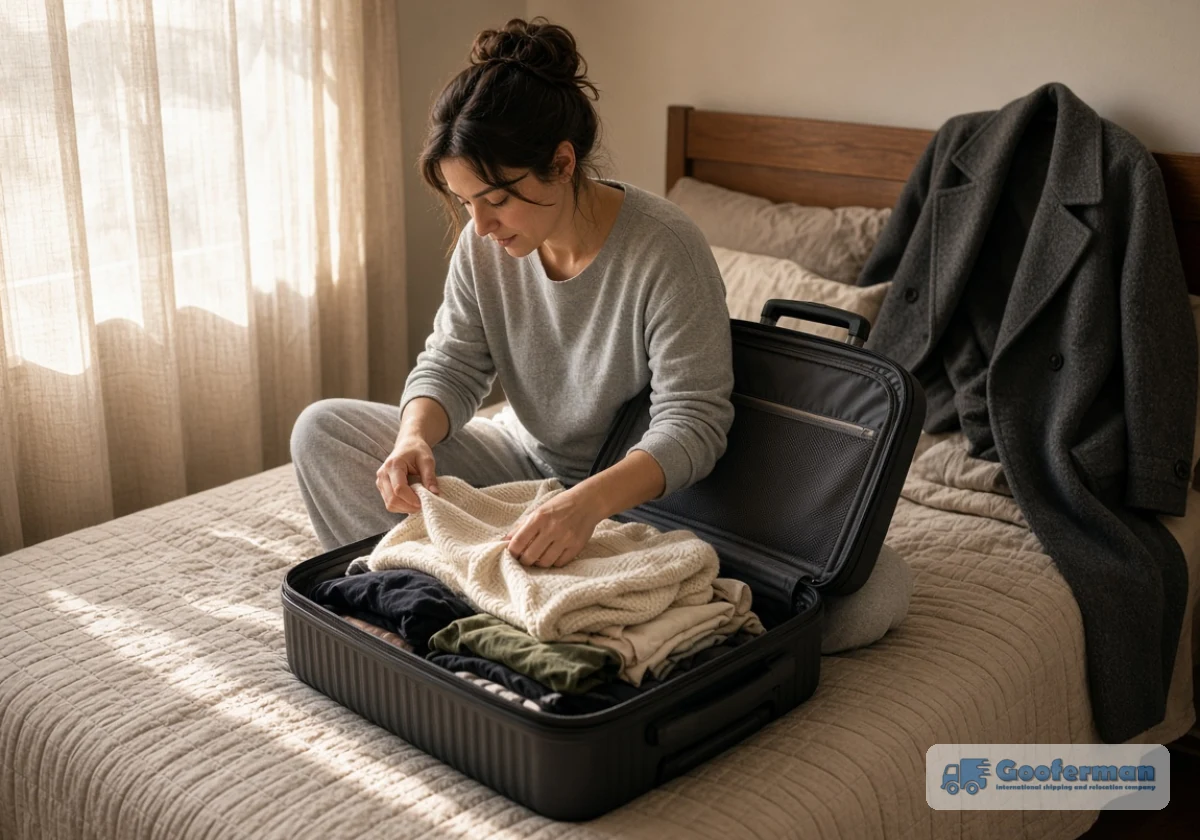
Choose layers that mix and match. A week of outfits plus one smart set covers work, errands and interviews. You can wash the basics while you wait for the rest of your clothes.
If you’re arriving in summer, bulky winter gear may be better suited to the container. This leaves more luggage space for items you’ll need as soon as you arrive.
Toiletries, Medication and a Small First-Aid Kit
Your destination may cap how much prescription medication you can bring in, so it’s worth looking up the limit early. Pack enough to tide you over for the first few weeks, while staying within that legal limit. It also helps to keep the prescription and a GP letter handy, because some countries ask for both.
Before you lock in travel arrangements, check that your medication is legal at your destination. Some common cold and pain tablets are restricted overseas, so ask your pharmacist about alternatives.
A small first-aid kit with permitted painkillers, plasters and allergy tablets is also useful during the first few days. Travel-sized toiletries should be enough until you find a local pharmacy.
Laptop, Phone, Chargers and the Right Plug Adapters
A laptop and phone run banking, job applications and calls home, so they travel in your carry-on. Every charger and cable you use daily goes in with them.
You’ll also need plug adapters that match your destination’s sockets. Australia uses Type I plugs, while the UK, most of Europe and North America use different types. Two adapters may be useful if you charge several devices daily.
Socket type is only half the check. Many laptop and phone chargers support 100 to 240 volts, but always read the input rating before using them abroad. Hair dryers and straighteners may need a voltage converter or local replacement.
A Few Kitchen Items and Bedding for the First Nights
Before booking temporary accommodation, check what’s included in the room or rental. A bed, basic cookware, laundry access and Wi-Fi could save you several early purchases.
If your accommodation doesn’t provide bedding, pack a set of sheets, a pillowcase and a light blanket. These fit into a vacuum bag without taking up much space. A travel pillow is another option if you don’t have room for a regular one.
For the kitchen, a travel mug and a few basic utensils may be enough for the first few days. If you pack a kitchen knife, check your airline and destination’s rules. Place it in checked baggage where permitted.
In our experience planning international removals, excess baggage on cookware often eats into a moving budget. Leave pots, pans and kitchen appliances for the shipment, or buy inexpensive replacements when you arrive.
One or Two Sentimental Items From Home
A small keepsake makes a bare rental feel like home in the first few weeks. A framed photo or a small soft toy takes up little space and softens culture shock on a lonely evening.
Irreplaceable pieces belong among the items to take on the plane rather than in the container. Photo albums and heirlooms can’t be replaced if a shipment gets damaged.
Luggage space is still limited, so choose the keepsakes you’d miss most during the first month. Scan other photos and leave the originals with someone you trust.
Important Documents to Keep in Your Hand Luggage
With the suitcase sorted, your paperwork needs its own spot in your carry-on. You’ll need some documents before your shipment arrives, especially for immigration, banking and housing. Keep the originals with you and check the rules on what can and cannot be shipped overseas.
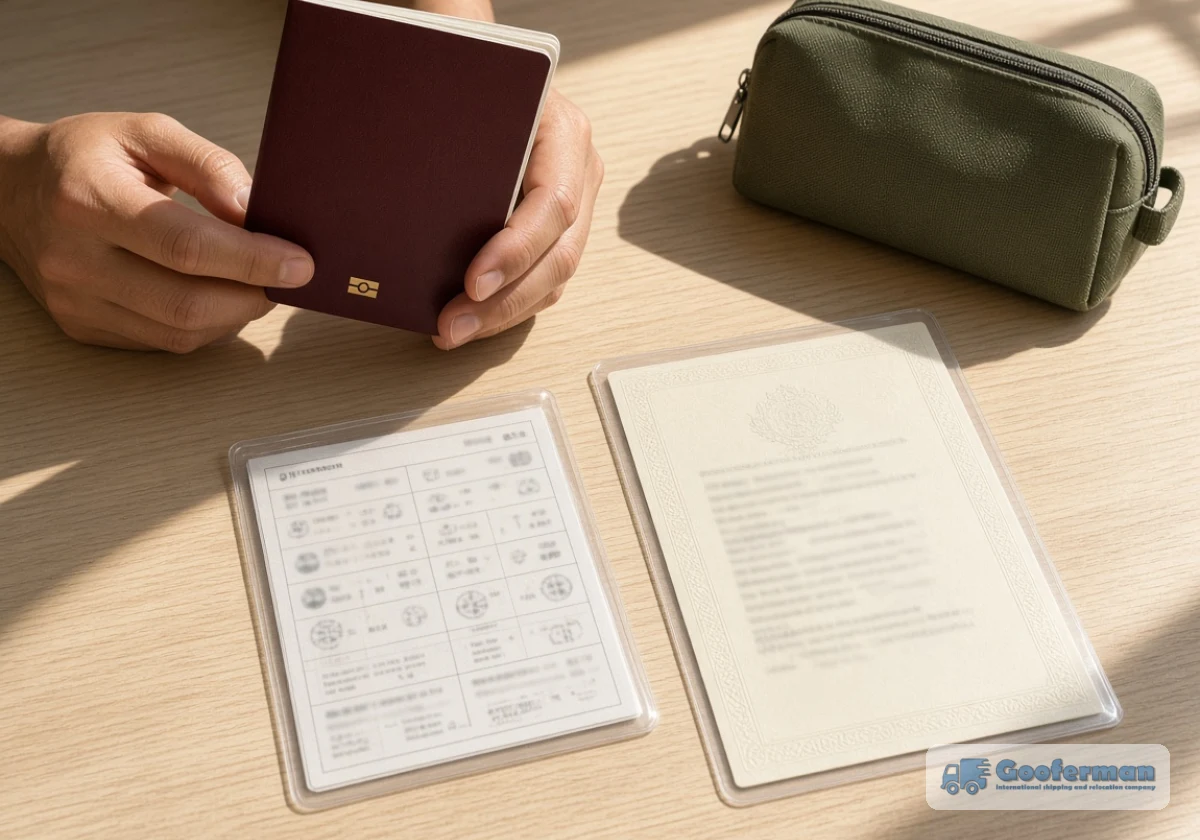
Hold on to these three groups of papers from door to door.
- Identity and Visa Papers: Your passport, visa grant letter and birth certificate may be needed for immigration, banking or identity checks. Bring marriage certificates if they’re relevant to your visa or family arrangements. Keep the originals in a secure folder in your hand luggage.
- Medical and Vaccination Records: Your new doctor may not have immediate access to your Australian medical records. Bring a medical summary and relevant vaccination records, especially if you need ongoing treatment. Ask your GP for these before departure.
- Scanned Copies of Everything: Digital copies give you a backup if an original document goes missing. Store them in a secure cloud folder and keep an encrypted offline copy on your phone. Avoid emailing sensitive documents to other people unless necessary.
Add your international health insurance policy, travel insurance, job contract and driver’s licence to the same folder when planning your move. Landlords and banks tend to ask for them early, and one folder saves frantic searching.
How Long Does International Moving Take Before Your Belongings Arrive?
With your documents packed, the next concern is when the rest of your belongings will arrive. How long your shipment takes depends on the transport method, route, customs clearance and final delivery arrangements.
The stages below show where your shipment spends its time and what you can do at each one.
| Stage | What Happens | What You Can Do |
|---|---|---|
| Packing and collection | Movers pack, list and load your goods | Pack your suitcase first so essentials stay out of boxes |
| Sea or air transit | Sea freight is slower and cheaper; air is faster for small loads | Ask your mover about transit estimates and the cost of sending urgent items separately. |
| Customs clearance | Officials check paperwork and may inspect goods | Prepare the required inventory and documents, and ask when they must be submitted. |
| Delivery | Goods travel from port to your door | Confirm your address and building access before the truck arrives |
Customs clearance may take longer if documents are missing or officials select your shipment for inspection. Keep your mover’s contact details handy and ask for updates when the estimated delivery date changes.
If delivery takes longer than expected, ask your mover about revised arrival dates and possible storage charges. Meanwhile, keep a small reserve in your moving budget for extra accommodation, laundry or essential household items.
Settling Into Your New Home Before Your Shipment Arrives: A 30-Day Moving Overseas Checklist
While your belongings are in transit, a weekly plan gives your first month living abroad some structure. It also helps you settle into your new home before the shipment arrives.
Some early tasks depend on having a local address, phone number or identity documents. Check the requirements for your destination before deciding which task comes first. One of the simplest moving tips is a phone reminder for each week (ask anyone who has unpacked a suitcase while jet-lagged).
Before leaving Australia, you’ll also have a few tasks to finish. Australia Post offers international mail redirection, but you must apply at a Post Office. Some parcels and registered items aren’t eligible.
Your finances need attention as well. Notify your bank about your move and check your Australian Taxation Office obligations. If you’re leaving your current home, review your gym memberships, streaming services and internet plans to see which ones need cancelling.
Use this international moving checklist to organise the first four weeks:
- Week One: Arrange a local SIM, check bank account requirements and complete any required address registration.
- Week Two: Apply for a tax number if needed, review health insurance coverage and find a local GP.
- Week Three: Learn the transport network, explore nearby shops and check your temporary accommodation arrangements.
- Week Four: Ask for a shipment update, confirm the delivery arrangements and prepare space for your furniture.
The first week is a good time to handle anything needed for work, housing or banking. If an application takes longer than expected, adjust the following weeks instead of rushing through the checklist.
Make Sure Your New Life Abroad Starts Before the Boxes Do
Moving abroad takes careful planning when your belongings are still in transit. Packing daily necessities and keeping important documents close helps you settle in while you wait.
A suitcase list and a weekly settling-in plan will keep you organised during the wait. They may also reduce last-minute purchases while your belongings are still in transit.
Ready to plan the shipment side of your move overseas? Contact Gooferman for international removal advice that fits your timeline and destination.